
In 2018, I joined Harvard Medical School for a fellowship in cancer policy. I was working as a medical oncologist in Civil Service Hospital, Kathmandu at that time and was spending very good quality time with my family, and a very satisfying professional time with my patients who trusted me with their cancer treatment. I had no intention of going abroad again- I had just returned from Japan having completed my oncology training. But then, an opportunity very difficult to turn down came- Harvard made an offer!
When Harvard makes an offer, you listen. You listen, and tell your parents about it. You talk to your friends. The same friends and family who told you to stay with them forever- even they can’t advise you against going to Harvard. Until then it was, you should stay with us forever. But when Harvard sends makes an offer, even your distant relatives from remote places say “That’s the best place out there. You should definitely grab this opportunity”. So, what place is this? Why does everyone hold Harvard with respect? What magic does this place do?
I want to share my experiences from working at Harvard for a year.
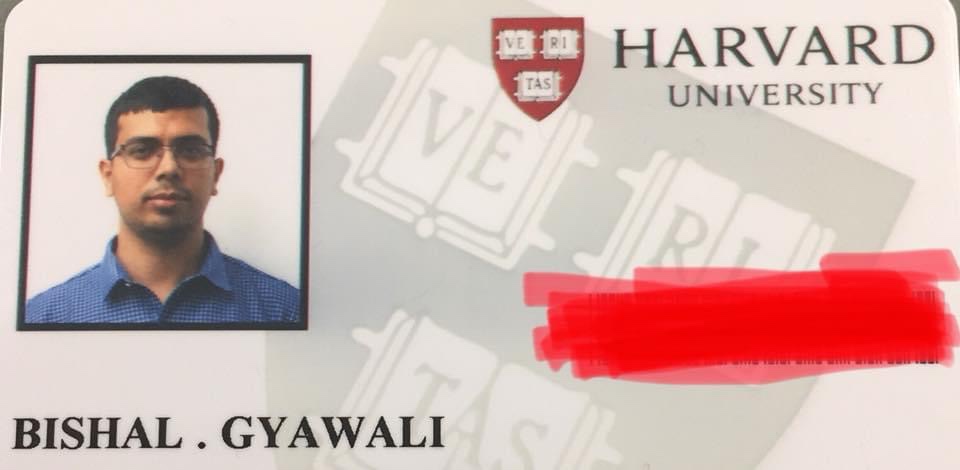
Having worked there among the best people in the world, the best lesson I learned was that Harvard was not anything mystical or magical. This may not sound like much of a lesson, but believe me it is. This is the one of the best life lessons. Let me explain.

I realized that not everyone at Harvard was bright. In fact, I can say- arbitrarily of course- that almost 80-90% of people who work at Harvard are average. Nothing very fancy or extraordinary about them. I felt like if I was the boss, I wouldn’t hire most of them. So, it’s not the majority of the Harvard population that’s making the difference. It’s the small minority, the 10-20% people who are really top-class extraordinary talent that’s making the difference (the good outliers).
In other words, most are ordinary just like anywhere else. But a few minority are really world-class brilliant- not like anywhere else.
And because of this special talent, Harvard has flourished. This special minority comes up with brilliant ideas, does most of the innovation, changes the world. The majority supports them, does the work under their leadership, and takes care of the day to day stuff. But it’s this small minority that is leading the change.
Come to think of it, this is true not only of Harvard, but United States as a whole. The average intelligence of the population does not seem super encouraging, but a minority few are the ones that have the vision to build Apple, Amazon, Google, Microsoft, Walmart, Costco, et al. A minority few win the Nobels and the Oscars.
This is very encouraging news.
What that means is we don’t necessarily need to change the mass or the crowd for progress. Everybody doesn’t need to be super intelligent for growth. Take Nepal, for example. To change our country, we may not necessarily need to make every citizen aware, responsible, and smart. We just need 10% of our citizens to be really extraordinarily brilliant and nurture and protect them well. To win cricket, we need world-class few dozen players and nurture them really well. If we can do that, the average will automatically absorb the vibe and support the 10% leading the charge.
This lesson is valuable for all walks of life. Most authors and artists are productive only during a short span in their lives. Most writers have written their best books within 10 years of their productive time. Most great musicians have produced their best music within a few years of their activity. Most stock market gains happen in a few days- from 2007 to 2022, only 10 days accounted for the difference between 8.81% gain versus a measely 3.29% gains for S&P 500.
I think that the converse is also true though. As long as the rest of the 10-20% people are average, that’s fine. But if there is a significant proportion of really bad people (the outliers bad), they can ruin everything- all the efforts of the really good and average people. Again, stock market example, just 5 trading days accounted for 94% of the S&P 500’s decline in 2022.

So, I guess the trick is to have 10% really good (the outliers good) people (or days or resources etc), 80% ordinary, and not more than 10% really bad (the outliers bad). It’s not necessary to make everybody brilliant but if someone is really terribly bad, that can drag down everything. For example, if you are a student, say out of 10 weeks in a course, 1 week of intense study is really important (before exams?), but the rest of the weeks you cannot make them bad weeks- you have to at least maintain them as average study weeks and maybe you can cut some slack for one week at most.
Agree?
BG


Leave a Reply